






Protect Original Product Designs
Protect eligible visual features of products against unauthorized copying or imitation, within the scope of the applicable rights.
The appearance of a product can be one of its most distinctive and valuable commercial assets. Its shape, configuration, lines, contours, ornamentation, colors, surface features, and visual presentation may distinguish it from competing products and influence how customers recognize, select, and perceive it.
Industrial design protection helps safeguard the visual characteristics of products against unauthorized copying or imitation, subject to applicable laws and registration requirements.
At Raqeva, we provide comprehensive industrial design services to help designers, innovators, manufacturers, businesses, and product owners protect, register, manage, and enforce their industrial design rights in relevant jurisdictions.
From preliminary design searches and registration strategy to application preparation, international protection, renewals, enforcement, and portfolio management, we support clients throughout the industrial design protection lifecycle.
Protect the Appearance That Sets Your Product Apart.
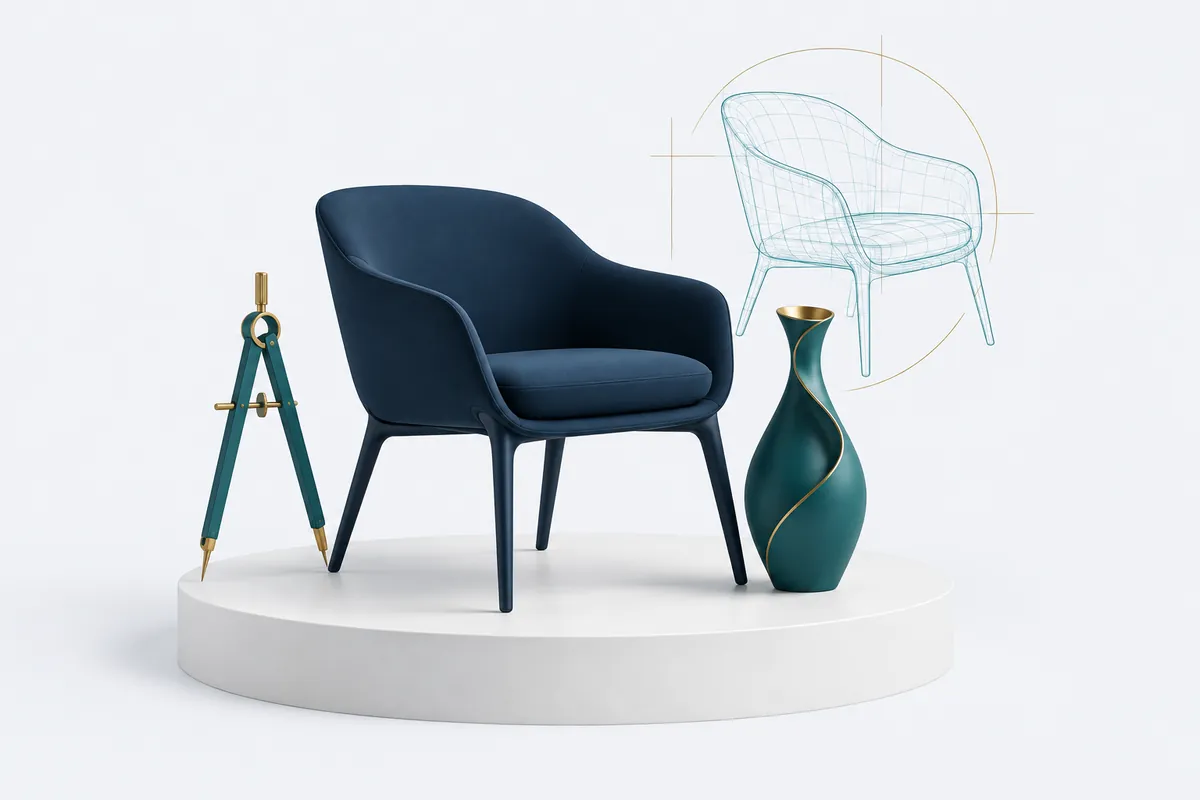
An industrial design generally refers to the ornamental or aesthetic aspects of a product.
It may relate to the appearance of an entire product or a part of it, including features such as:
Industrial design protection focuses primarily on the visual appearance of a product rather than the technical or functional features that determine how the product works.
Depending on the applicable legal framework, an industrial design may be protected through registration or other available legal mechanisms.
Protection requirements, scope, duration, exclusions, and procedures vary between jurisdictions.
Product appearance can play a significant role in commercial success.
A distinctive design may help a business differentiate its products, strengthen brand recognition, improve market positioning, and create valuable intellectual property assets.
Industrial design protection may help businesses and designers:
Protect eligible visual features of products against unauthorized copying or imitation, within the scope of the applicable rights.
Establish a distinctive visual identity that helps products stand apart from competing offerings.
Protect investment in product design, development, prototyping, styling, and market positioning.
Develop commercially valuable design assets that may contribute to differentiation and market recognition.
Create opportunities to license, assign, commercialize, or otherwise exploit protected design rights.
Consider design protection as part of product launches, export strategies, international expansion, and commercial partnerships.
Develop and manage industrial design rights alongside trademarks, patents, copyright, and other relevant intellectual property assets.
Depending on the applicable law and the nature of the design, protection may be available for various visual aspects of products.
The availability and scope of protection depend on the product, the design representation, the applicable legal requirements, and any relevant exclusions.
The distinctive shape, configuration, contours, or arrangement of a product or its components.
Examples may include furniture shapes, consumer product forms, containers, accessories, and certain industrial product configurations.
The overall visual appearance of a product, including the combination of relevant visual features.
Decorative elements, surface patterns, graphical arrangements, ornamentation, and visual features applied to products.
Eligible designs relating to the appearance of packaging, bottles, containers, boxes, and other product presentation elements.
Visual designs associated with furniture, lighting, fixtures, household products, and interior-related articles.
Eligible designs relating to footwear, bags, jewelry, accessories, apparel-related products, and other fashion items, subject to applicable requirements.
Distinctive product appearances relating to electronic devices, appliances, accessories, and other consumer products.
Visual designs associated with tools, machinery components, equipment, instruments, and other industrial articles where the relevant visual features qualify for protection.
Industrial designs and patents protect different aspects of innovation.
Understanding the distinction is important when determining how to protect a new product.
Generally focuses on the visual or ornamental appearance of a product. It may protect eligible features such as:
Generally focuses on qualifying technical inventions, including technical solutions, mechanisms, processes, or functional improvements, subject to patentability requirements. Patent protection may be relevant where the innovation concerns how a product works, how it is constructed, or a technical solution it provides.
In certain circumstances, the same product may contain features that may be considered for different forms of intellectual property protection.
These rights are distinct and may complement one another.
The appropriate protection strategy depends on the product, the relevant features, the applicable laws, and the commercial objectives.
We provide industrial design services covering the different stages of design protection, management, and commercial development.
Conduct relevant searches to identify potentially existing designs, assess preliminary conflicts, and support informed decisions before filing or commercializing a design.
Assist with the registration of eligible industrial designs through relevant national, regional, or international procedures.
Assist in preparing industrial design applications and the relevant representations and documentation.
The application may require carefully prepared drawings, photographs, views, descriptions, product information, and other materials depending on the applicable jurisdiction.
Proper preparation of design representations is important because the scope of protection may be influenced significantly by what is shown in the application.
Assist businesses and designers in exploring design protection across relevant international markets.
Depending on eligibility and the intended jurisdictions, international protection may involve national filings, regional systems, or the Hague System for the International Registration of Industrial Designs.
We help clients consider relevant jurisdictions, filing requirements, available routes, and protection priorities.
Assist with the management of renewal deadlines, maintenance requirements, registration records, and relevant formalities to help preserve industrial design rights.
Renewal periods, duration, and procedures vary depending on the jurisdiction.
Help businesses manage multiple industrial design registrations and applications through structured records, portfolio reviews, territorial coverage assessments, renewal management, and protection planning.
Assist with the transfer of industrial design ownership through relevant assignment agreements, documentation, and recordal procedures.
Support industrial design owners in exploring licensing arrangements and commercial opportunities involving protected designs.
Relevant considerations may include permitted use, territory, duration, commercial terms, contractual obligations, and applicable recordal requirements.
Assist design owners in addressing potential unauthorized copying, imitation, infringement, and other matters affecting their industrial design rights.
Potential actions may depend on the nature of the design rights, evidence, jurisdiction, and available legal procedures.
Assist with relevant design-related disputes, including challenges, objections, invalidity matters, infringement concerns, and other proceedings where available under the applicable law.
Provide guidance concerning design protection strategy, filing priorities, product launch planning, protection requirements, and intellectual property considerations relating to product appearance.
Assist with reviewing industrial design rights and related records in connection with transactions, acquisitions, licensing arrangements, investments, partnerships, and commercial projects.
We follow a structured approach to industrial design protection, tailored to the nature of the product, the design, and the jurisdictions involved.
We begin by understanding the product, its visual features, intended use, commercial significance, and the markets in which it will be introduced. We may review:
We review the available design information to identify potential protection considerations and determine the appropriate next steps. This may include assessing the nature of the visual features, relevant legal requirements, possible exclusions, and the available protection routes.
Where appropriate, we conduct relevant searches to identify potentially similar designs and assess preliminary considerations before filing. The scope may vary depending on the intended markets, available databases, product category, and client's objectives.
We help determine where protection may be appropriate, considering:
We assist in preparing the application and reviewing the relevant design representations, documentation, and filing information. Depending on the jurisdiction, design applications may require specific views, image formats, disclaimers, descriptions, or other formalities.
We assist with filing the industrial design application through the relevant procedure and address applicable formal requirements.
We monitor relevant procedural developments and assist with examination matters, formal requirements, objections, or other communications where applicable. Examination procedures differ between jurisdictions.
Where the application is successfully registered, we assist with relevant registration documentation, recordkeeping, and guidance concerning the resulting rights.
We assist with renewals, portfolio management, licensing, ownership records, enforcement considerations, and future protection requirements.
Industrial design protection requirements vary by jurisdiction. However, certain legal considerations are commonly relevant.
Many design protection systems require a design to be new or novel under the applicable legal standard.
Prior disclosure of a design may affect its eligibility for protection, depending on the jurisdiction, the circumstances of disclosure, and any applicable exceptions or grace periods.
Some jurisdictions require a design to possess individual character or a comparable legal quality, assessed under the relevant legal standard.
The assessment may involve the overall impression created by the design in comparison with relevant earlier designs.
The design must fall within the scope of subject matter that may be protected under the relevant legal framework.
Certain features may be excluded from protection, including features dictated solely by technical function or other excluded subject matter, depending on the jurisdiction.
The drawings, photographs, or other visual representations submitted with the application are important.
They should clearly and consistently represent the design for which protection is sought and comply with the applicable requirements.
The applicant must have the appropriate entitlement to seek protection.
Ownership may depend on the circumstances of creation, employment, contractual arrangements, assignment, and applicable law.
Timing can be critical. Public disclosure, commercial launch, publication, exhibitions, online presentation, or other disclosure may affect eligibility in certain jurisdictions.
It is advisable to assess filing requirements before publicly disclosing a design.
These requirements should be evaluated individually in the relevant jurisdiction.
Industrial design protection is closely connected to the visual representation of the design submitted with the application.
The representation may influence how the design is identified and the scope of protection that may be available.
Depending on the jurisdiction and type of design, application materials may include:
Inconsistent, unclear, incomplete, or poorly prepared representations may create formal issues or affect the identification of the design.
The appropriate representations should be prepared according to the applicable requirements and the design protection strategy.
Where a product contains several visual features, it may be important to consider which elements are intended to form part of the claimed design and how they should be represented.
The filing strategy may depend on the product, the design, the relevant legal requirements, and the intended scope of protection.
For businesses manufacturing, exporting, distributing, or selling products internationally, design protection may form an important part of the commercial expansion strategy.
Industrial design rights are territorial in nature, and protection in one jurisdiction does not automatically establish protection worldwide.
We assist clients in exploring industrial design protection in relevant markets, including:
Depending on the circumstances, protection may be pursued through national applications, regional systems, or international filing mechanisms.
The Hague System provides a mechanism for seeking international registration of industrial designs in multiple designated jurisdictions through a centralized filing process, subject to eligibility, applicable requirements, and the relevant contracting parties.
An international registration does not create a universal design right covering every country.
The effect of protection depends on the designated jurisdictions and their applicable legal requirements.
We support businesses and product owners across a range of industries where product appearance and design differentiation may be commercially important.
Protect distinctive product appearances, shapes, configurations, and visual features associated with consumer goods.
Protect eligible designs associated with furniture, lighting, fixtures, decorative products, and interior-related articles.
Consider protection for eligible product designs in fashion, footwear, bags, jewelry, accessories, and related products.
Protect distinctive external appearances of devices, accessories, electronic products, and other eligible designs.
Consider protection for eligible packaging, containers, bottles, boxes, and distinctive visual product presentation.
Protect eligible visual features of industrial products, components, equipment, and manufactured articles.
Consider industrial design protection for eligible vehicle components, accessories, product forms, and related design features.
Assess eligible product appearance features associated with medical, healthcare, and related products, subject to applicable requirements.
Protect distinctive designs associated with household products, appliances, utensils, décor, and lifestyle goods.
Support designers, design studios, manufacturers, and product development businesses in managing and protecting their design assets.
Protect eligible product designs early in the development process and consider relevant filing requirements before public disclosure or commercial launch.
Develop and manage industrial design portfolios associated with product lines, new releases, manufacturing operations, and market expansion.
Consider appropriate protection for original product designs and address ownership, commercialization, and licensing requirements.
Evaluate design protection in relevant markets and coordinate filing priorities according to commercial objectives.
Protect product appearance and consider design rights as part of a broader intellectual property strategy.
Businesses with multiple products or design variations may benefit from structured industrial design portfolio management.
A portfolio may include multiple registrations, applications, product categories, jurisdictions, owners, renewal dates, and commercial arrangements.
Our portfolio management services may include:
A well-managed portfolio can help businesses maintain visibility over their design rights and make informed decisions regarding future product development and market expansion.
Industrial design rights may create commercial opportunities beyond direct product manufacturing and sales.
Depending on the rights and applicable law, design owners may explore:
Relevant arrangements should be documented appropriately, taking into account ownership, scope, territory, duration, permitted use, commercial terms, and applicable requirements.
Allow third parties to use protected designs under agreed commercial terms.
Transfer ownership of industrial design rights through appropriate legal arrangements.
Integrate design rights into manufacturing, distribution, development, or strategic partnership arrangements.
Consider protected designs in connection with new products, variations, markets, or commercial opportunities.
Evaluate design rights as part of a broader intellectual property and commercial strategy.
Industrial design owners may face unauthorized copying, imitation, distribution, manufacturing, importation, or commercialization of products that potentially infringe their rights.
We assist clients in considering appropriate responses to design-related concerns, subject to the applicable rights, evidence, jurisdiction, and legal procedures.
Potential matters may include:
The available remedies and procedures vary by jurisdiction and the circumstances of the matter.
Professional support across industrial design searches, registration, protection, management, and enforcement.
We consider the product, its distinctive visual features, commercial objectives, and relevant markets when evaluating protection strategies.
Support for clients seeking industrial design protection across multiple jurisdictions through appropriate national, regional, and international routes.
Assistance from preliminary assessment and filing through registration, renewals, portfolio management, commercialization, and enforcement.
We aim to provide understandable guidance regarding relevant requirements, procedures, potential risks, and next steps.
Services tailored to the client's product, business model, commercial objectives, and protection priorities.
Ongoing support as products evolve, new designs are developed, and businesses expand into additional markets.
Industrial design protection generally safeguards eligible ornamental or aesthetic features of a product, such as its shape, configuration, lines, contours, patterns, or other visual characteristics, subject to applicable legal requirements.
Industrial design protection generally concerns the visual appearance of a product, while patent protection generally concerns qualifying technical inventions or functional solutions.
A product may potentially qualify for different forms of intellectual property protection for different features.
Eligible designs may relate to a wide range of products, including consumer goods, furniture, packaging, electronics, accessories, industrial products, and other articles, subject to applicable requirements and exclusions.
Requirements vary by jurisdiction but may include novelty, individual character or other applicable criteria, eligible subject matter, proper representations, and appropriate applicant entitlement.
It is advisable to assess protection requirements before publicly disclosing or launching a design. Disclosure may affect eligibility in certain jurisdictions, and filing deadlines or grace periods may vary.
International protection may be pursued through relevant national, regional, or international filing mechanisms, subject to eligibility and applicable requirements.
The Hague System is an international mechanism that facilitates filing for industrial design protection in multiple designated jurisdictions through an international registration procedure.
It does not provide automatic worldwide protection.
The duration of protection varies by jurisdiction. Some systems provide an initial protection period followed by renewals, subject to applicable maximum durations and requirements.
Some jurisdictions and filing systems permit multiple designs to be included in one application, subject to eligibility, product-related requirements, filing rules, and applicable fees.
Possibly, depending on the jurisdiction, the timing and nature of disclosure, applicable novelty requirements, and any available grace periods or exceptions. Early legal assessment is recommended.
Industrial design protection generally focuses on visual appearance rather than technical functionality. Technical features may require consideration of patent protection or other applicable rights.
Industrial design rights may generally be licensed or assigned, subject to applicable laws, formal requirements, and appropriate contractual arrangements.
Potential actions may include investigation, evidence gathering, legal assessment, correspondence, negotiations, administrative procedures, or litigation, depending on the rights, jurisdiction, and circumstances.
Trademark and industrial design protection serve different purposes. A trademark may protect distinctive signs identifying commercial origin, while industrial design protection may safeguard eligible product appearance features. Both may complement one another.
Industrial design services are subject to applicable laws, registration requirements, jurisdiction-specific procedures, and the circumstances of each design.
The availability of industrial design protection, scope of rights, duration, registration outcomes, and enforcement remedies cannot be guaranteed.
Industrial design searches and preliminary assessments do not guarantee registration, the absence of conflicting rights, or immunity from infringement claims.
A distinctive product design can represent a significant investment in creativity, development, manufacturing, and commercial positioning.
Protecting eligible design features can help businesses and designers preserve the value of their product appearance, strengthen differentiation, and develop their intellectual property assets.
Whether you are developing a new product, preparing for launch, expanding internationally, managing existing registrations, or addressing potential design infringement, Raqeva can assist you in exploring an industrial design protection strategy tailored to your objectives.
Protect Your Design. Strengthen Your Product. Secure Your Competitive Advantage.
특허를 검색, 출원, 대응 및 관리하여 발명을 보호하고 경쟁 우위를 강화하십시오.
Protect, license and enforce copyright and related rights in your creative, software and digital works.
권리를 지키고 침해에 효과적으로 대응하십시오.